The preeminent reading order for those who want the whole story, from the beginning to the present.

“The only thing more frightening than dying is living in a world where one man is too frightened to help another.”
– Professor Charles Xavier, Uncanny X-Men #299
Welcome to my X-Men reading order blog! You can call me Ghost. I have been reading comics for my entire life. This project is one that I have been wanting to create for a while now, and I am very excited that you have found your way to it!
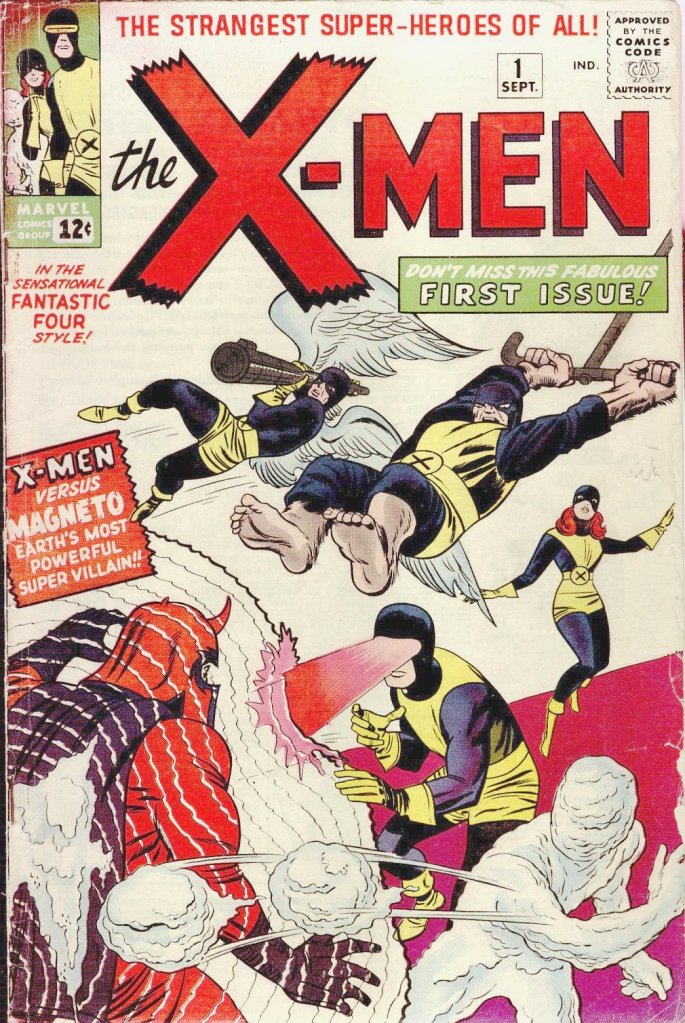
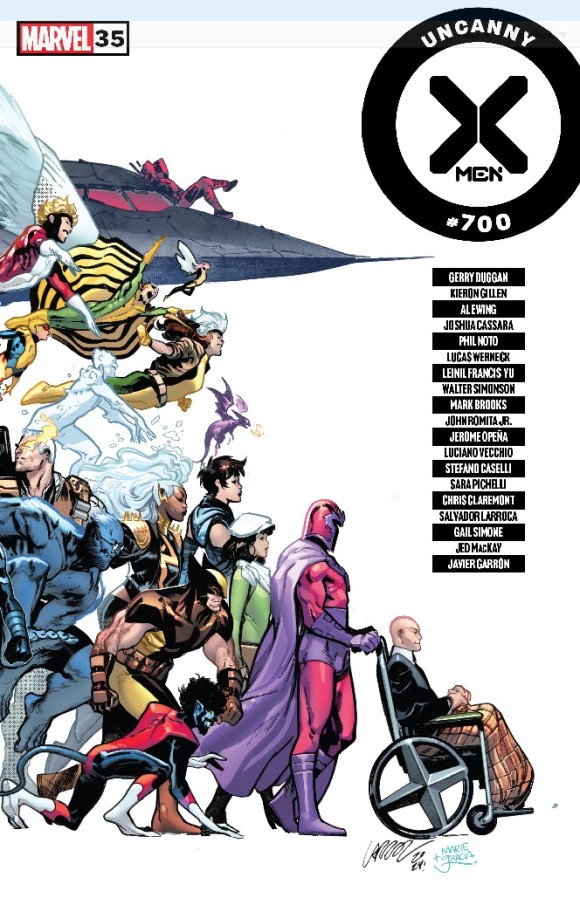
To clarify, this site is not a reading order for the comic book entitled Ultimate X-Men which was published between 2001 and 2009. No, the subject of this is of a much broader scale. This site was created to walk readers through the entire history of the X-Men in the primary 616 Marvel Universe, from their debut in 1963 until today. I have put a lot of time and love into creating this order, with the intent that it is the best and most accurate one of its kind on the internet. I hope that it allows you to enjoy as much as I have what is perhaps the greatest long-running team comic and social allegory comic ever written.
How to Use The Ultimate X-Men Reading Order
Before you dive right into this reading order, there are some things it would be helpful to know. First of all, let me tell you a little bit about how all this was put together.
There are a number of other websites which purport to offer a complete reading order for X-Men (as well as for other comic series). Some of them are good. Some of them are great. Some of them are… not going to be confused for either of those descriptors. What makes this one the best of them all? Well, first and foremost, it’s because I have read every comic on this list myself. Whereas most comic book orders of this magnitude rely on a combination of other lists and user submissions, I have actually read every issue of X-Men and most X-Men adjacent series (more on what exactly is included in the order in a moment) and made sure that the order I have put forward makes sense from a continuity standpoint. I have been very meticulous in this process, because I really want to create the smoothest possible journey for anyone who decides to use my order as a guide. I am not claiming that my order is perfect (that’s actually not possible for reasons I will get into further down) but as far as I know, nothing else exists that will give as complete and organized a picture as what I have here.
What comic books are included in The Ultimate X-Men Reading Order?
The first question many of you may have is this: “When you say this is The Ultimate X-Men Reading Order, what exactly do you mean by ‘Ultimate?’ How do you define the scope of the X-Men?” This may seem like an odd question if you aren’t familiar with the team, but if you are, you know that there have been many versions of the team, oftentimes seperate squads running concurrently with the same name, as well as offshoots of the team. For the purposes of this list, any direct offshoot of the X-Men that could reasonably be considered an extention of the main team is included. So all X-Men squads, as well as The New Mutants/X-Force, the first generation of X-Factor, Generation X, the New X-Men, Hope Summers’ squad of Lights, the time-displaced X-Men, and the students of the Xavier and Jean Grey schools of Gifted Learners. The only “major” branches of X-teams you will not find chronicled here are X-Factor after it was turned into a government-run team and the British team Excalibur (though both groups show up periodically). I determined that these teams, though usually comprised mostly of mutants and X-adjacent characters, were seperate enough to not really count as X-Men, per se.
This order is meant to tell the story of the X-Men as a team. So it focuses on anytime three or more X-Men appear together in a comic (be it an X-Men comic or otherwise) for more than a very brief cameo. That means that there are issues of various X-Men solo series (Wolverine, Cable, Gambit, etc.) that will not show up in this order. Many individual issues of those series’ will show up, as the X-Men are either present in them or the issues are relevant to the overall story. But they are not the focus of this order because they are not about the X-Men as a team.
This is not an essentials only type of order. Every appearance of the X-Men that amounts to more than a brief cameo is included here. It is only stuff that does not contain at least three X-Men which must be deemed important to the overall narrative in order to be included.
On that note, I want to mention one other thing that I believe to be unique about my Order. There are sometimes issues in the Order that do not feature X-Men at all. The reason for this is that certain events in the Marvel Universe that affect the X-Men (for example, Civil War or the newer Secret Wars) are not X-Men-centric events. They do involve the X-Men, so they are not skippable; however, in order to get a complete and fleshed out story, it is often necessary to read issues focused on other characters. So when it is in service of the overall narrative to go off track to something that is not directly about the X-Men, I have done that. Overall though, this is always meant to be the story of the X-Men above all else.
How is the Order organized?
The Reading Order is divided into large sections of X-Men history so as to give a reader natural points to have a break in reading. The entire Order has over 4,000 issues in it, so if you embark upon this, it will be QUITE a project. However, reading it in smaller chunks of 100-200 issues (sometimes more, but I tried to keep it around that size) is more manageable. *Yes, I realize 100-200 issues is still a lot to most people. But that is about as small as I can reasonably make eras of X-Men be. Anyway, it’s not like anybody is timing you. You can take as long to read this stuff as you want.* These breaks also provide readers with the ability to choose only certain eras of X-Men history if they want. You can feel like you are getting a complete story for that time period without having to read everything that comes before it. Each section will have it’s own unique title and page on this site to make things more easy to navigate.
Continuity
Now, let’s talk about continuity. As I said, my goal is for this project is for it to be the most accurate and easy-flowing X-Men reading order on the internet. In order to achieve that, I read everything myself, but even doing that, I would not have been able to put together something like this without help. There is just too much going on in the X-Men world, especially once you get to the 90’s and beyond, with the enormous amount of content being published – between main books, spin-offs, solo series, guest appearances, mini-series, etc. I needed a starting point to help me figure out how to read this stuff in the first place, and to give me a decent idea of how to organize it. I could not have done this without several websites (listed here) organized by people who likely put in far more work than even I have. I stand on the shoulders of giants.
Even so, there are some continuity errors still present in my Order. Some of them are impossible to exercise. There was a time in comic book history when Marvel editors were pretty good at meticulously keeping track of the continuity of their shared world. Sometime in the 90’s they largely began to give up on this. Not that Marvel doesn’t still value continuity – they definitely do – but there was just too much going on for them to catch every little thing or even to think it was worth trying. After all, how many people actually read everything? On top of this, individual writers tend to have their own visions for a story. If different writers are writing different stories at the same time, they may accidentally write something that conflicts with what another writer is doing. It’s usually not a major conflict (though sometimes it is). While I do think that the vast majority of continuity errors could still be avoided with better communication and teamwork between writers of related series, I also understand why this does not always work out. And I admit that I have never been employed as a writer by a major comic book company like Marvel (or any comic book company for that matter), so any ideas I have for making continuity smoother in their books can only be theoretical.
It is also possible that there are some errors, especially towards the end of my Order, that could be fixed and that I have simply failed to notice them. In the first few decades, this is highly unlikely, except perhaps in a few places where I had to go back and add a few issues months or years after I had read the issues around them. But from the 2000’s onward, especially in the last several years of my order, this is more possible, mainly due to the sheer amount of mini-series and relaunches constantly going on, being published more or less simultaneously, that require various characters to be in a lot of different places seemingly at once. I have tried to organize it well, but it is possible that if I were to reread these later sections again, some things would need to be shifted. Even so, this is the case on pretty much every ongoing order I know of, and I maintain that mine should be the most accurate one of all overall.
All that being said – one thing I do not recommend is trying to combine this order with another reading order for a non-X-Men team or character. I mean, you can use it to help if you want, but don’t expect the accuracy to work out as well. I did not account for the continuity of other books when putting together this order. I just tried to make things make sense for the X-Men and the story that is comprised by the pages of these many issues.
Sometimes comics in the Reading Order overlap. Sometimes several issues happen in between the pages of an issue. Where that happens, I have attempted to note it. I do not always have specific pages where this occurs, unfortunately (though in recent years I do far more often), but I can at least tell you that somewhere in issue A, you need to break to read other issues B, C, D, etc. I have tried to make this clear by making my comic lists into multi-level lists, with issues that occur within another issue sub-bulleted beneath the issue that you should begin reading first.
In cases where I do have page numbers available to help, they may not always be exactly accurate, and I apologize for that. The reason they may be somewhat difficult to match is that I do not have the physical copies of most of these books. When reading them online, they sometimes contain the ad pages, but most times they do not. Additionally, they also sometimes show the page numbers and sometimes do not. So if I could see actual numbers on a page (far more likely in the eras up to the mid-90’s), I went by those numbers, but if not, I simply counted the pages that were not ads. In most cases, you should be able to count the non-ad pages to match my instructions. You will also have to use a bit of common sense when deciding whether or not to interrupt an ongoing scene. I wish I knew of a more clear way to do this, but I will say that I personally have not seen any other order that is even as detailed as what I have provided here when it comes to this matter. I hope my attempts to organize things as much as I have (especially in major crossovers like X-Necrosha and Avengers vs. X-Men where tons of things are happening all at once) are mostly helpful.
Legacy Numbers
I want to make one last note before we move on, in regard to issue numbers. Marvel has a thing called “legacy numbers” which allow them to preserve the high issue count of a title while still re-launching it over and over to attract new readers with new #1 issues. I like the concept of keeping the legacy numbers but I don’t care much for the execution. For one thing, I hate false re-launches which make readers think they are starting fresh when they really aren’t. Starting a new storyline isn’t the same as starting a whole new series, and it insults reader intelligence to act like it is (imo). But more relevantly, the way Marvel calculates its Legacy numbers can at times be pretty contrived. Here, I have gone by my own system. The issue number that appears on the cover is displayed first, to make any issue on this list easy to identify. If there is a “legacy” number, it is in parenthesis after the issue number that is displayed. My legacy numbers are calculated to ignore false re-launches while respecting real ones. So if a book “ends” only to pick up again immediately with a new set of numbers and possibly a slightly different title, it will have a legacy number in parenthesis next to each issue to show that continuance. If a book ends and does not resume for a period of months or years, then the next time a title launches with that name, it will NOT have a Legacy number, whether Marvel wants it to or not, because it is a genuinely new book. If you disagree with the way I am doing this, feel free to ignore my legacy numbers – like I said, the number you need to find the issue, the number displayed on the cover, will always be listed first.
And now, without futher adieu, I present to you the Ultimate X-Men Reading Order. Click on through to the pages that follow to get started.
 The Ultimate X-Men Reading Order